Improving exercise adherence for novice exercisers through clearer fitness guidance.
Role: Sole Product Designer (with mentorship from a Senior Product Designer and Chief Design Officer)
Timeline: 6 month-long concept project for my Springboard UI/UX certification
Constraints: Sole designer
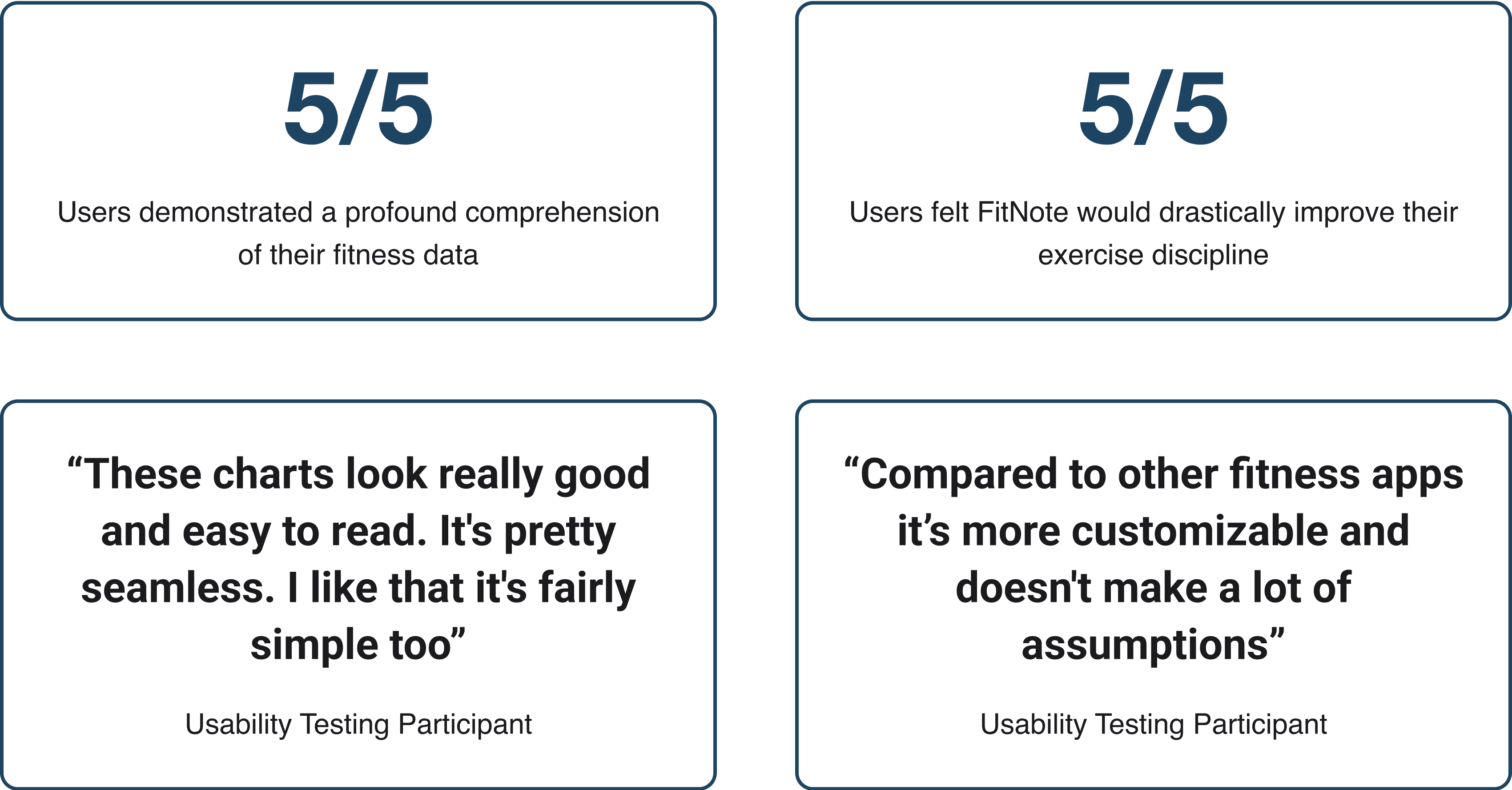
Impact: 5/5 users demonstrated a profound comprehension of their fitness data; 5/5 users felt FitNote would drastically improve their exercise discipline
Overview
FitNote is a beginner focused fitness tracking app designed to improve workout adherence by helping users understand what they are doing and why it matters.
Problem
New fitness users often abandon tracking tools early due to overwhelming interfaces and unclear feedback that make progress difficult to interpret.
Design Direction
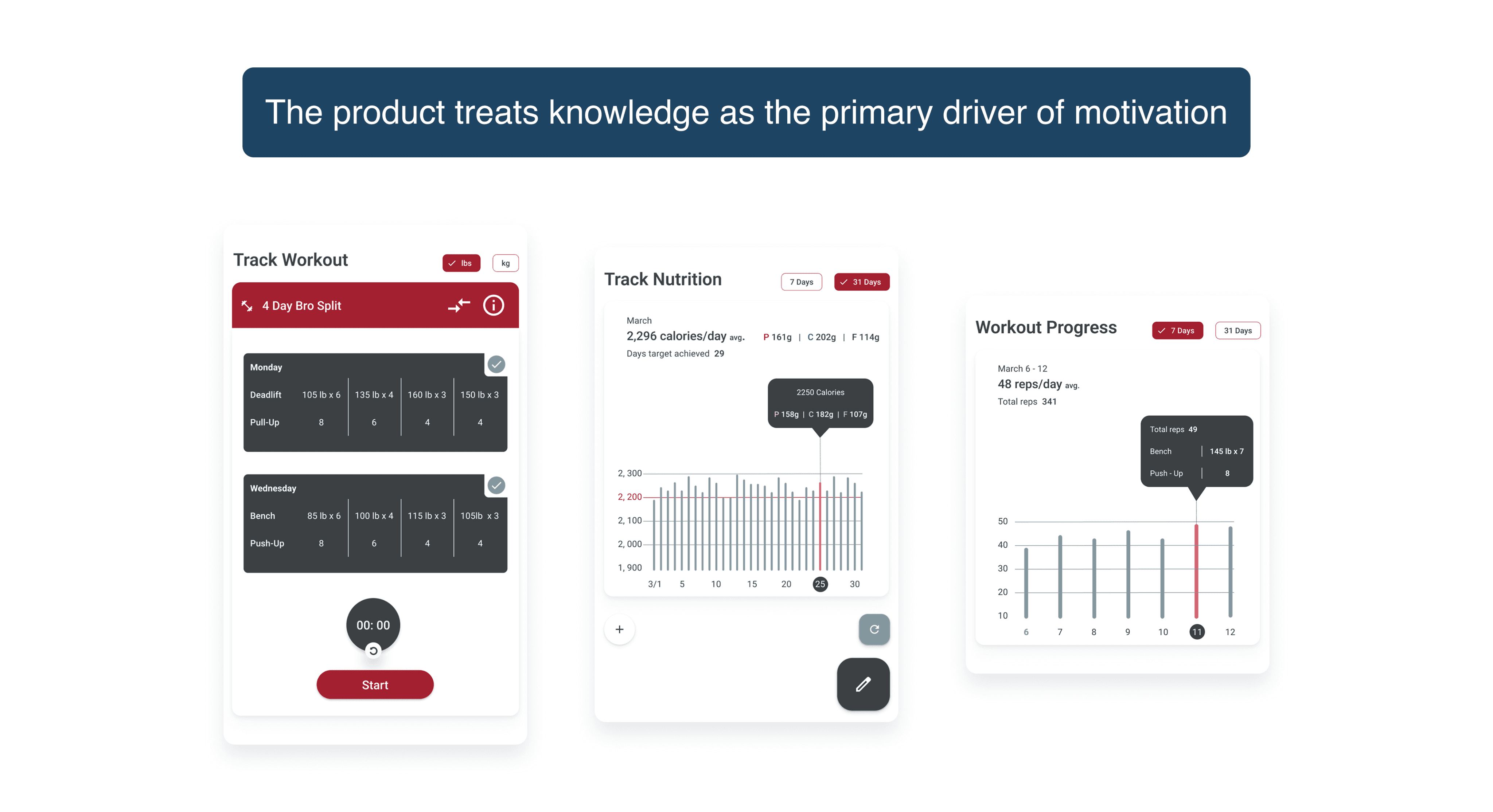
Knowledge as motivation.
FitNote was positioned around helping beginners understand their actions and progress, reframing fitness tracking as a learning experience rather than a data dump.
Core Experience Model
From logging to learning.
Workouts, progress, and personal context are structured to reinforce comprehension over time, supporting habit formation rather than one off engagement.

System Level Decisions
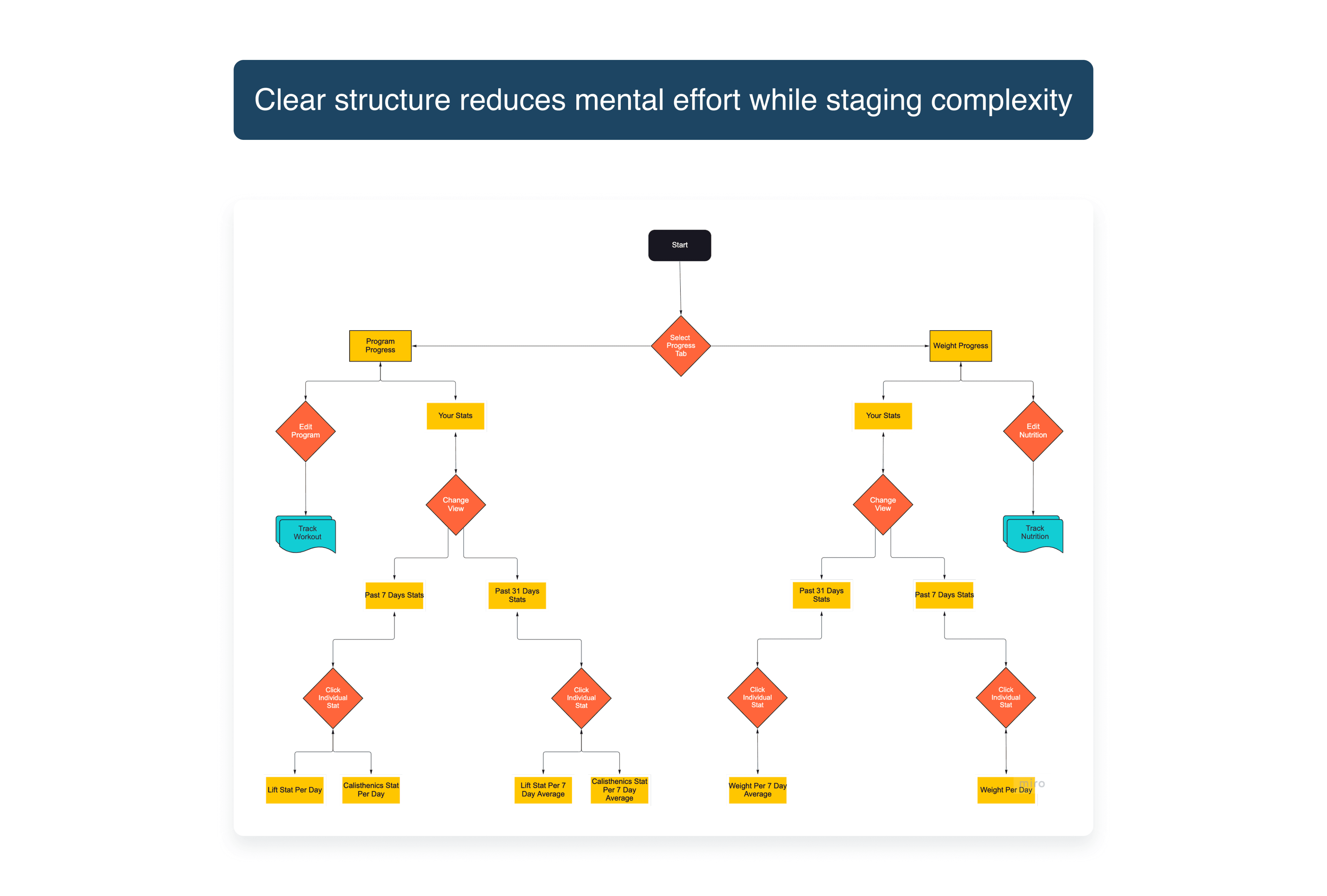
Reducing cognitive load at every step.
Information hierarchy, layout, and pacing were intentionally designed to minimize overwhelm while preserving depth for continued use.
Interaction Structure
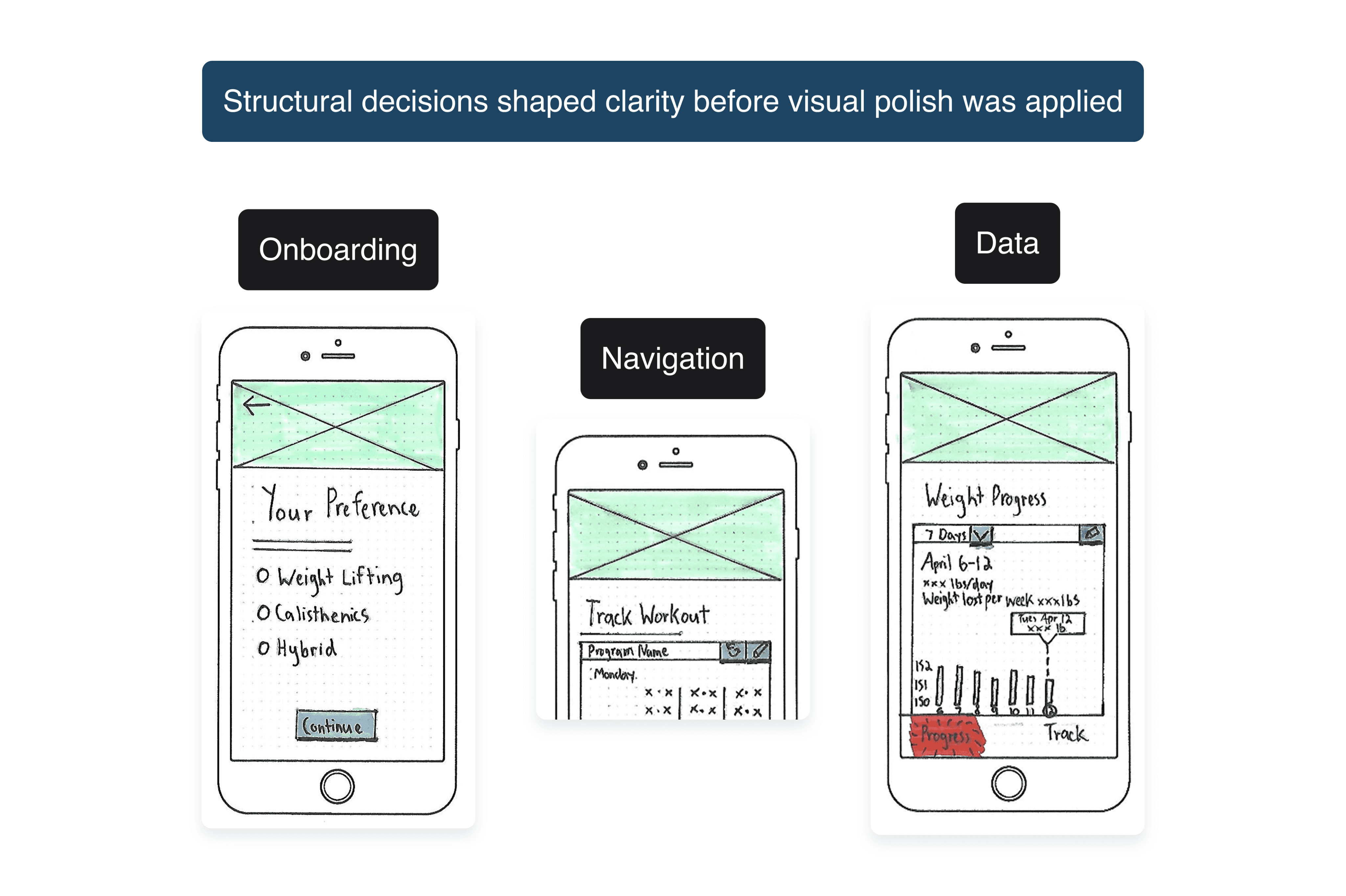
Translating intent into usable flows.
Low fidelity wireframes were used to resolve onboarding, navigation, and data presentation early, ensuring clarity and reduced friction before visual refinement.
Final Execution
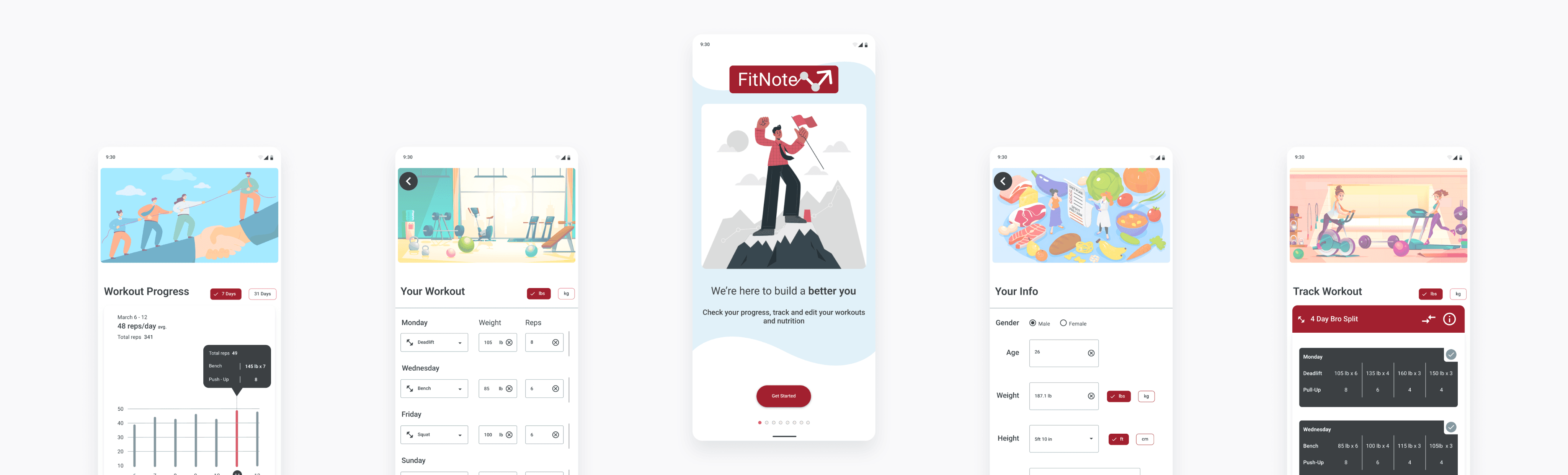
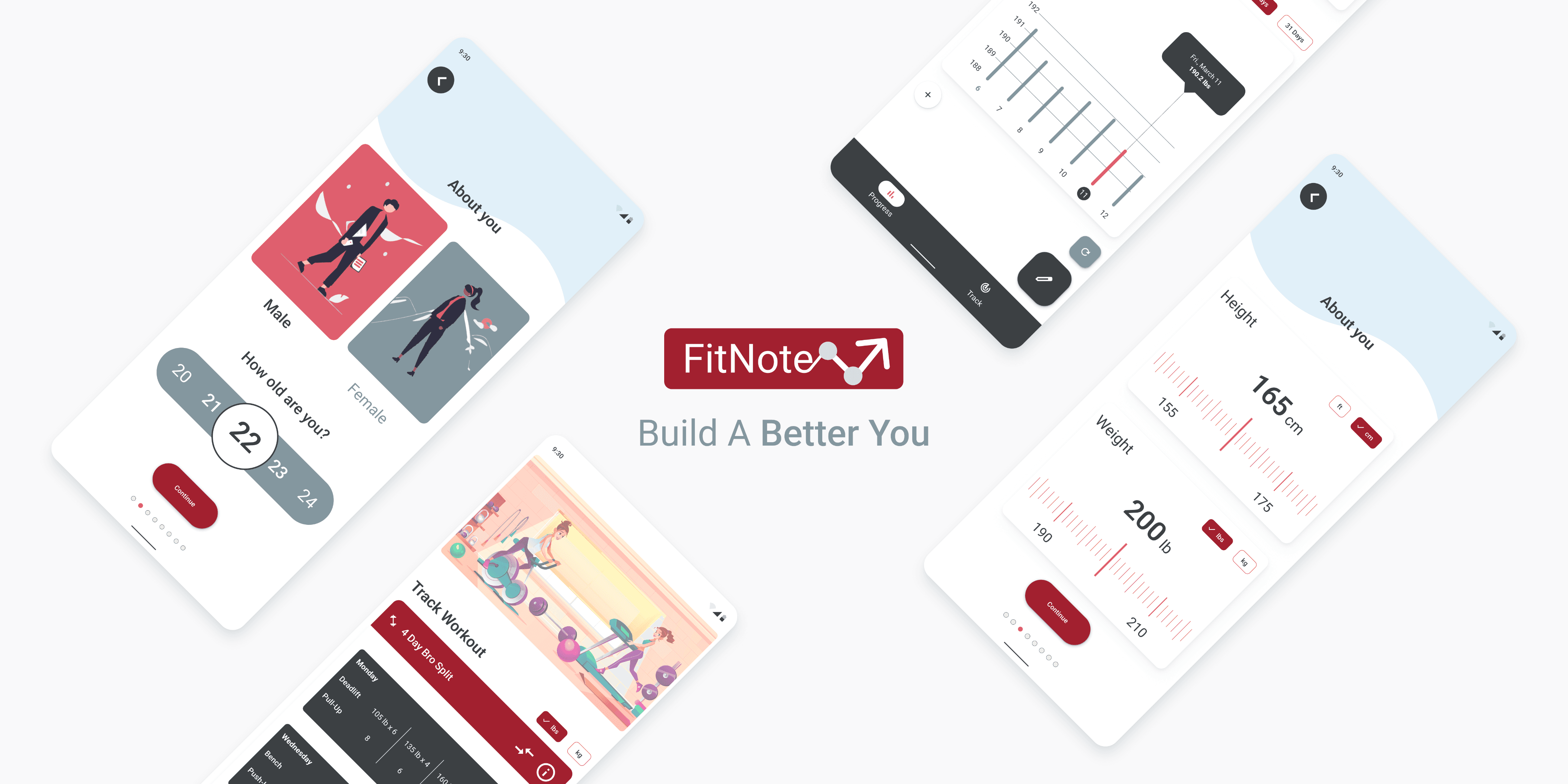
A calm, approachable fitness product.
The final interface balances approachability and credibility, supporting long term engagement without intimidation.
Impact
Confidence drives adherence.
User validation showed strong comprehension and perceived impact, reinforcing that clarity and education can meaningfully improve exercise discipline for beginners.
Improving exercise adherence for novice exercisers through clearer fitness guidance.
Quick Read
Full Case Study
Role: Sole Product Designer (with mentorship from a Senior Product Designer and Chief Design Officer)
Timeline: 6 month-long concept project for my Springboard UI/UX certification
Constraints: Sole designer
Impact: 5/5 users demonstrated a profound comprehension of their fitness data; 5/5 users felt FitNote would drastically improve their exercise discipline
Overview
FitNote is a beginner focused fitness tracking app designed to improve workout adherence by helping users understand what they are doing and why it matters.
Problem
New fitness users often abandon tracking tools early due to overwhelming interfaces and unclear feedback that make progress difficult to interpret.
Design Direction
Knowledge as motivation.
FitNote was positioned around helping beginners understand their actions and progress, reframing fitness tracking as a learning experience rather than a data dump.
Core Experience Model
From logging to learning.
Workouts, progress, and personal context are structured to reinforce comprehension over time, supporting habit formation rather than one off engagement.
System Level Decisions
Reducing cognitive load at every step.
Information hierarchy, layout, and pacing were intentionally designed to minimize overwhelm while preserving depth for continued use.
Interaction Structure
Translating intent into usable flows.
Low fidelity wireframes were used to resolve onboarding, navigation, and data presentation early, ensuring clarity and reduced friction before visual refinement.
Final Execution
A calm, approachable fitness product.
The final interface balances approachability and credibility, supporting long term engagement without intimidation.
Impact
Confidence drives adherence.
User validation showed strong comprehension and perceived impact, reinforcing that clarity and education can meaningfully improve exercise discipline for beginners.
Improving exercise adherence for novice exercisers through clearer fitness guidance.
Quick Read
Full Case Study
Role: Sole Product Designer (with mentorship from a Senior Product Designer and Chief Design Officer)
Timeline: 6 month-long concept project for my Springboard UI/UX certification
Constraints: Sole designer
Impact: 5/5 users demonstrated a profound comprehension of their fitness data; 5/5 users felt FitNote would drastically improve their exercise discipline
Overview
FitNote is a beginner focused fitness tracking app designed to improve workout adherence by helping users understand what they are doing and why it matters.
Problem
New fitness users often abandon tracking tools early due to overwhelming interfaces and unclear feedback that make progress difficult to interpret.
Design Direction
Knowledge as motivation.
FitNote was positioned around helping beginners understand their actions and progress, reframing fitness tracking as a learning experience rather than a data dump.
Core Experience Model
From logging to learning.
Workouts, progress, and personal context are structured to reinforce comprehension over time, supporting habit formation rather than one off engagement.
System Level Decisions
Reducing cognitive load at every step.
Information hierarchy, layout, and pacing were intentionally designed to minimize overwhelm while preserving depth for continued use.
Interaction Structure
Translating intent into usable flows.
Low fidelity wireframes were used to resolve onboarding, navigation, and data presentation early, ensuring clarity and reduced friction before visual refinement.
Final Execution
A calm, approachable fitness product.
The final interface balances approachability and credibility, supporting long term engagement without intimidation.
Impact
Confidence drives adherence.
User validation showed strong comprehension and perceived impact, reinforcing that clarity and education can meaningfully improve exercise discipline for beginners.