
Reimagining Possibility by turning complex content into a scalable publishing experience.
Role: Sole Product Designer (with assistance from Design Team & Clientele)
Timeline: 3 month-long project for Teledyne Digital Imaging Inc.
Constraints: Align design with existing Teledyne CMS blocks, Limit creation of new blocks within Optimizely CMS
Impact: Established a research-driven design framework enhancing navigation, readability, and brand cohesion, ready for future implementation
Overview
Possibility is a Teledyne Digital Imaging publishing platform redesign focused on improving navigation, readability, and brand cohesion within existing CMS constraints.
Problem
Possibility’s educational content was difficult to engage with because dated interface patterns, fragmented navigation, and inconsistent article structures weakened content discovery.
Content Access
Simplifying how users move through the platform.
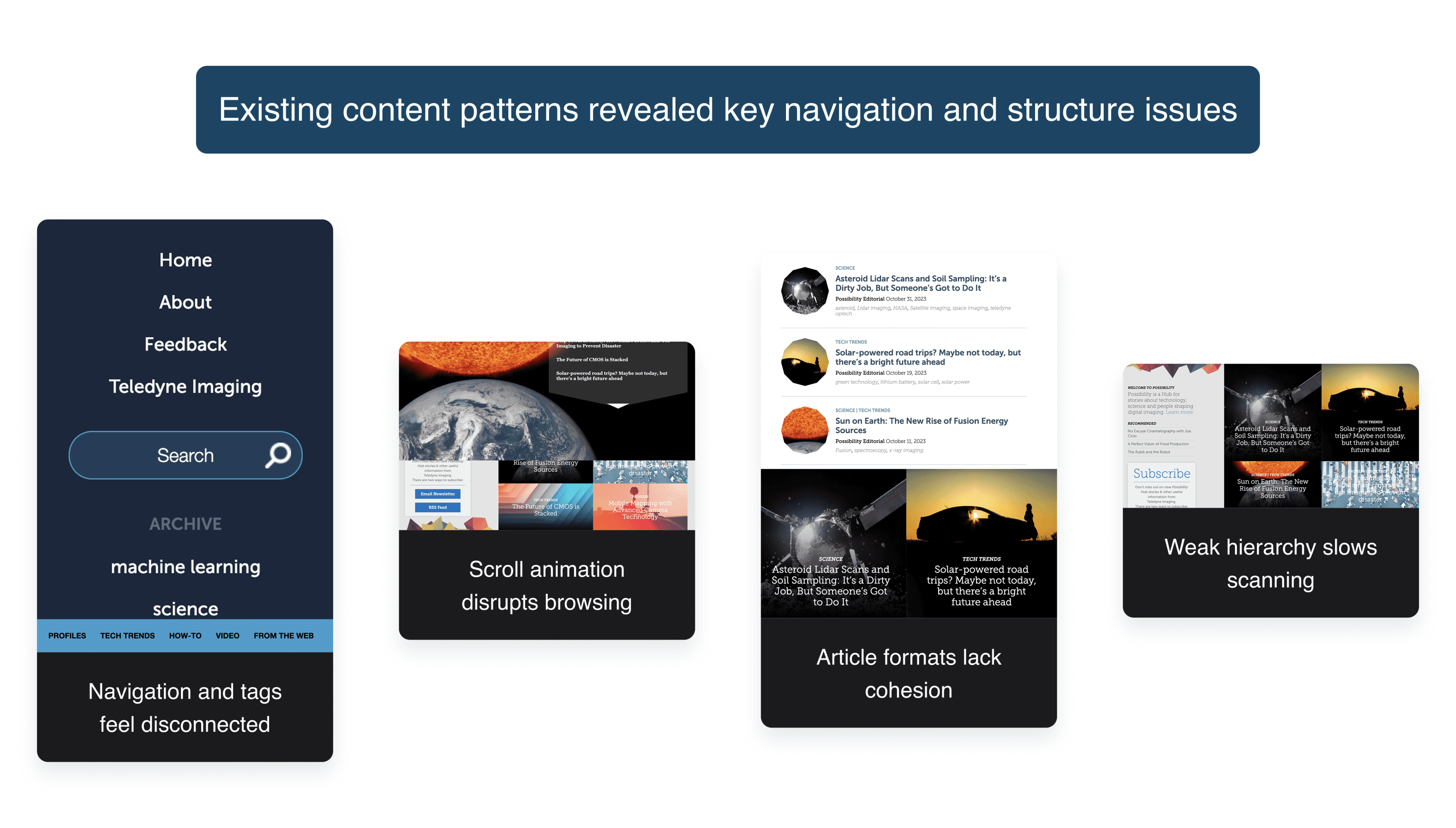
The existing Possibility site made valuable educational content harder to browse through unclear navigation, dated interactions, and inconsistent presentation. These issues clarified the need for a more structured publishing experience before redesign work moved forward.
Research Framework
Translating publishing patterns into design direction.
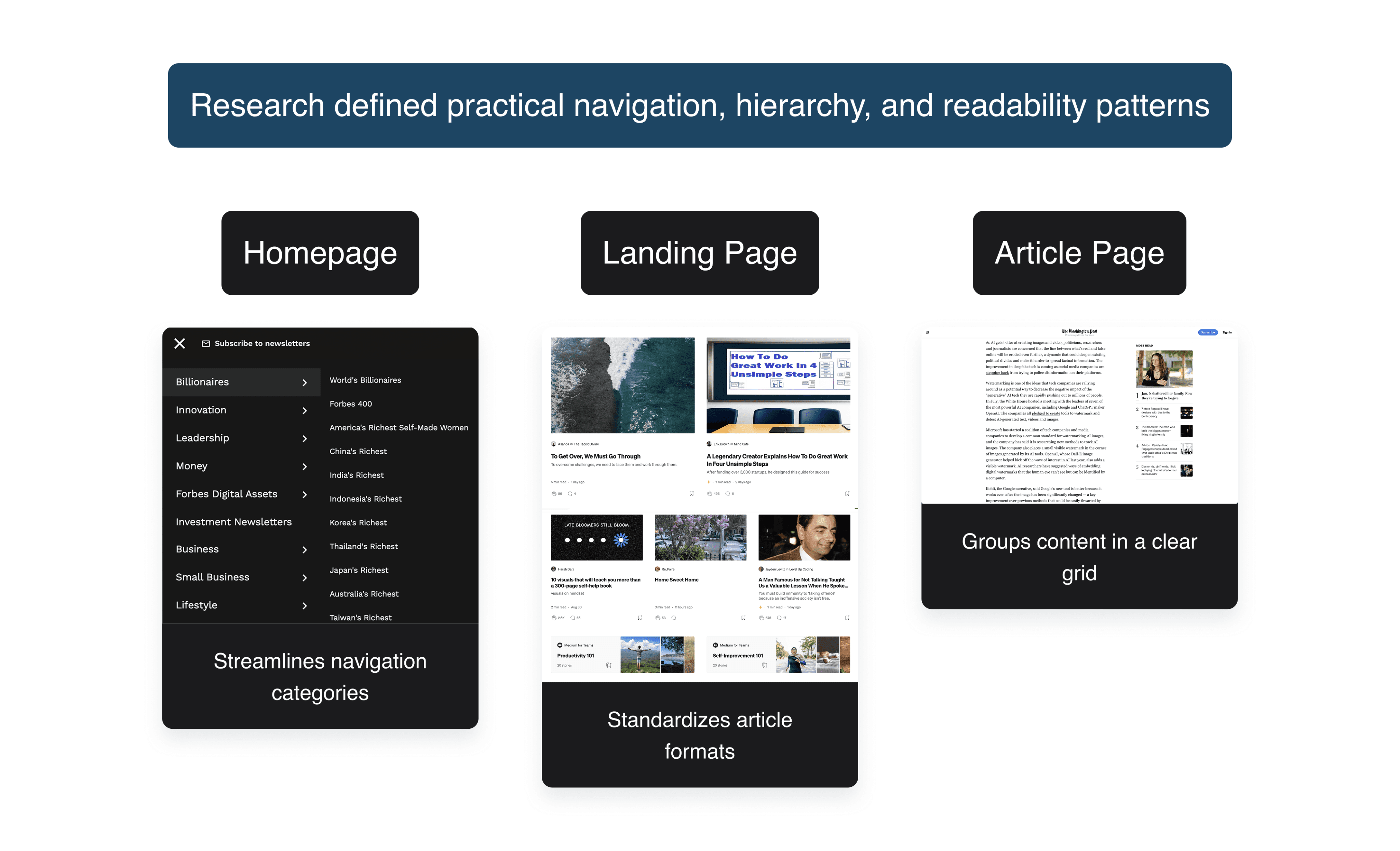
Competitive analysis of leading publishing platforms clarified how strong editorial systems organize homepages, category pages, and article pages. These references helped turn broad client feedback into clearer decisions around hierarchy, readability, and content discovery.
Design Priorities
Focusing the redesign around scalable content needs.
Research synthesis identified visual cohesion, brand imagery, and structured content as the strongest opportunities for improving Possibility. These priorities kept the redesign focused on a more cohesive publishing system instead of isolated page updates.

Visual System
Building a distinct Teledyne publishing identity.
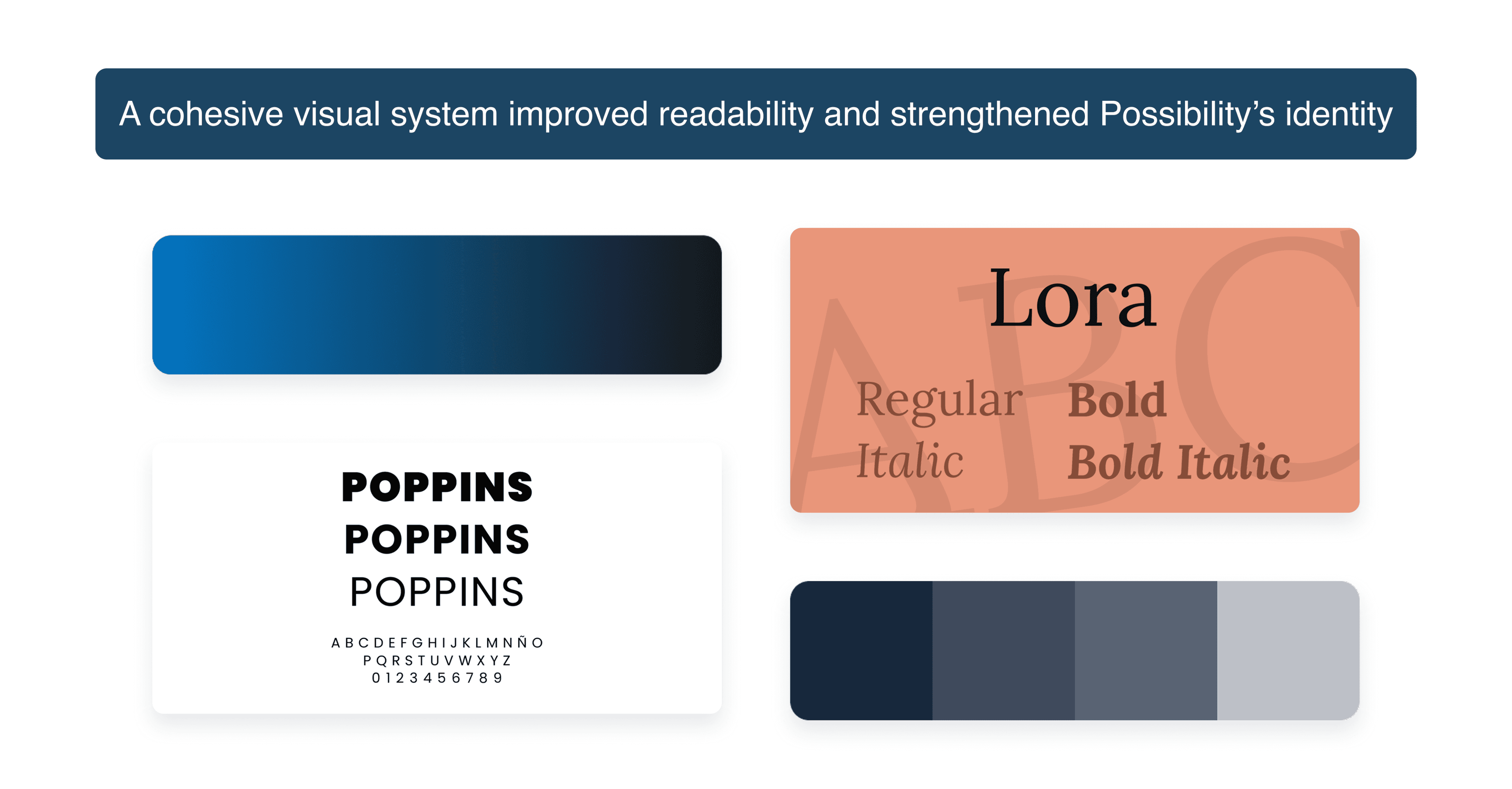
Typography, colour, spacing, and gradients were refined to create a more readable and recognizable identity for Possibility. The visual system balanced Teledyne brand alignment with the needs of long form editorial content.
Publishing Experience
Structuring homepage, spine pages, and articles.
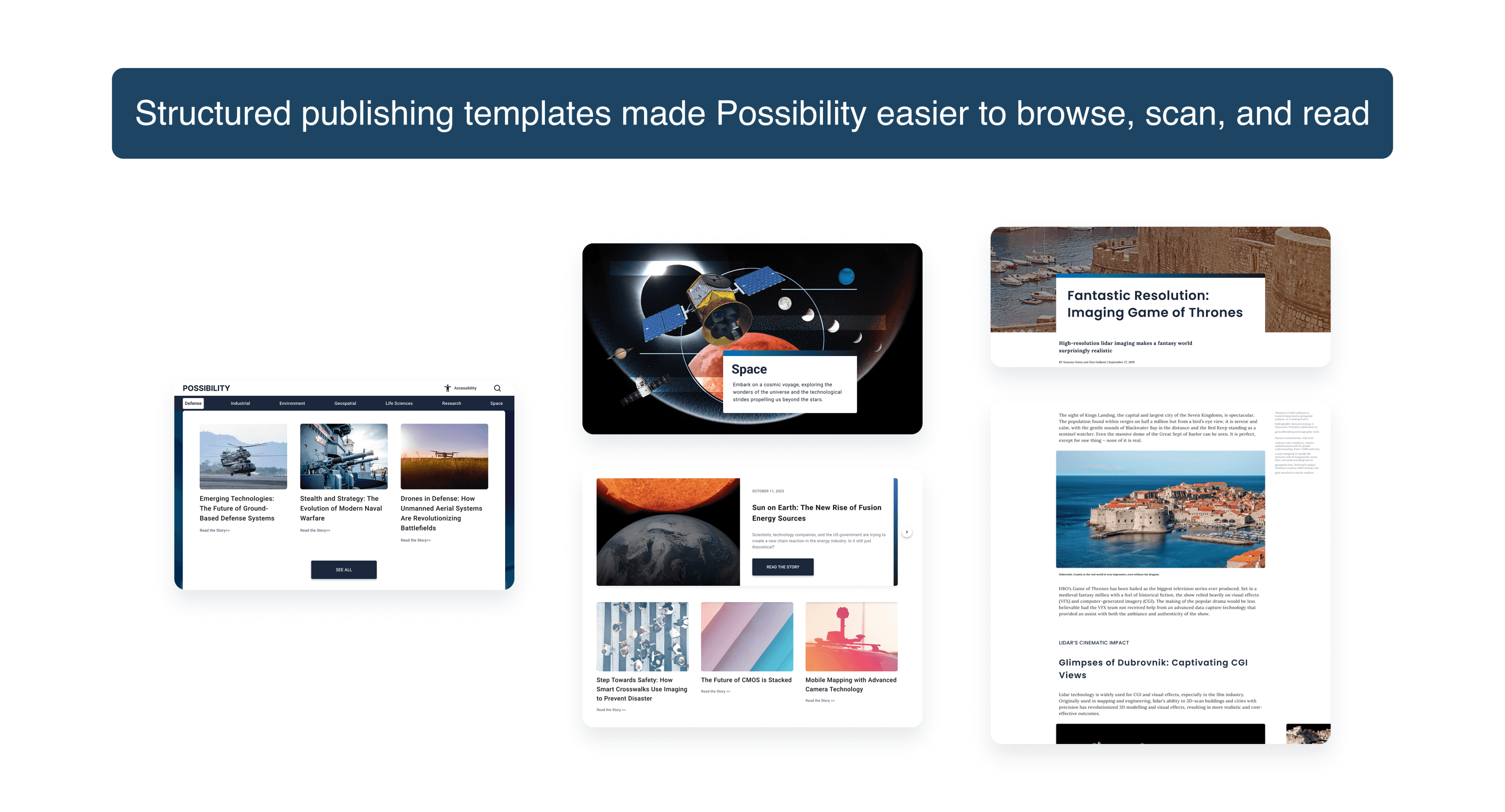
High fidelity designs reorganized the platform around clearer navigation, stronger hierarchy, and reusable publishing templates. Homepage, spine page, and article layouts were designed to improve browsing, category exploration, and long form reading.
Impact
Establishing a scalable publishing foundation.
The redesign created a clearer foundation for navigation, readability, brand cohesion, and future implementation. Even though the project was shelved before launch, the work gave Teledyne a structured framework for improving content discovery and engagement.
Reimagining Possibility by turning complex content into a scalable publishing experience.
Quick Read
Full Case Study
Role: Sole Product Designer (with assistance from Design Team & Clientele)
Timeline: 3 month-long project for Teledyne Digital Imaging Inc.
Constraints: Align design with existing Teledyne CMS blocks, Limit creation of new blocks within Optimizely CMS
Impact: Established a research-driven design framework enhancing navigation, readability, and brand cohesion, ready for future implementation
Overview
Possibility is a Teledyne Digital Imaging publishing platform redesign focused on improving navigation, readability, and brand cohesion within existing CMS constraints.
Problem
Possibility’s educational content was difficult to engage with because dated interface patterns, fragmented navigation, and inconsistent article structures weakened content discovery.
Research Framework
Translating publishing patterns into design direction.
Competitive analysis of leading publishing platforms clarified how strong editorial systems organize homepages, category pages, and article pages. These references helped turn broad client feedback into clearer decisions around hierarchy, readability, and content discovery.
Design Priorities
Focusing the redesign around scalable content needs.
Research synthesis identified visual cohesion, brand imagery, and structured content as the strongest opportunities for improving Possibility. These priorities kept the redesign focused on a more cohesive publishing system instead of isolated page updates.
Visual System
Building a distinct Teledyne publishing identity.
Typography, colour, spacing, and gradients were refined to create a more readable and recognizable identity for Possibility. The visual system balanced Teledyne brand alignment with the needs of long form editorial content.
Publishing Experience
Structuring homepage, spine pages, and articles.
High fidelity designs reorganized the platform around clearer navigation, stronger hierarchy, and reusable publishing templates. Homepage, spine page, and article layouts were designed to improve browsing, category exploration, and long form reading.
Content Access
Simplifying how users move through the platform.
The existing Possibility site made valuable educational content harder to browse through unclear navigation, dated interactions, and inconsistent presentation. These issues clarified the need for a more structured publishing experience before redesign work moved forward.
Impact
Establishing a scalable publishing foundation.
The redesign created a clearer foundation for navigation, readability, brand cohesion, and future implementation. Even though the project was shelved before launch, the work gave Teledyne a structured framework for improving content discovery and engagement.
Reimagining Possibility by turning complex content into a scalable publishing experience.
Quick Read
Full Case Study
Role: Sole Product Designer (with assistance from Design Team & Clientele)
Timeline: 3 month-long project for Teledyne Digital Imaging Inc.
Constraints: Align design with existing Teledyne CMS blocks, Limit creation of new blocks within Optimizely CMS
Impact: Established a research-driven design framework enhancing navigation, readability, and brand cohesion, ready for future implementation
Overview
Possibility is a Teledyne Digital Imaging publishing platform redesign focused on improving navigation, readability, and brand cohesion within existing CMS constraints.
Problem
Possibility’s educational content was difficult to engage with because dated interface patterns, fragmented navigation, and inconsistent article structures weakened content discovery.
Research Framework
Competitive analysis of leading publishing platforms clarified how strong editorial systems organize homepages, category pages, and article pages. These references helped turn broad client feedback into clearer decisions around hierarchy, readability, and content discovery.
Translating publishing patterns into design direction.
Design Priorities
Research synthesis identified visual cohesion, brand imagery, and structured content as the strongest opportunities for improving Possibility. These priorities kept the redesign focused on a more cohesive publishing system instead of isolated page updates.
Focusing the redesign around scalable content needs.
Visual System
Typography, colour, spacing, and gradients were refined to create a more readable and recognizable identity for Possibility. The visual system balanced Teledyne brand alignment with the needs of long form editorial content.
Building a distinct Teledyne publishing identity.
Publishing Experience
High fidelity designs reorganized the platform around clearer navigation, stronger hierarchy, and reusable publishing templates. Homepage, spine page, and article layouts were designed to improve browsing, category exploration, and long form reading.
Structuring homepage, spine pages, and articles.
Content Access
The existing Possibility site made valuable educational content harder to browse through unclear navigation, dated interactions, and inconsistent presentation. These issues clarified the need for a more structured publishing experience before redesign work moved forward.
Simplifying how users move through the platform.
Impact
Establishing a scalable publishing foundation.
The redesign created a clearer foundation for navigation, readability, brand cohesion, and future implementation. Even though the project was shelved before launch, the work gave Teledyne a structured framework for improving content discovery and engagement.